|
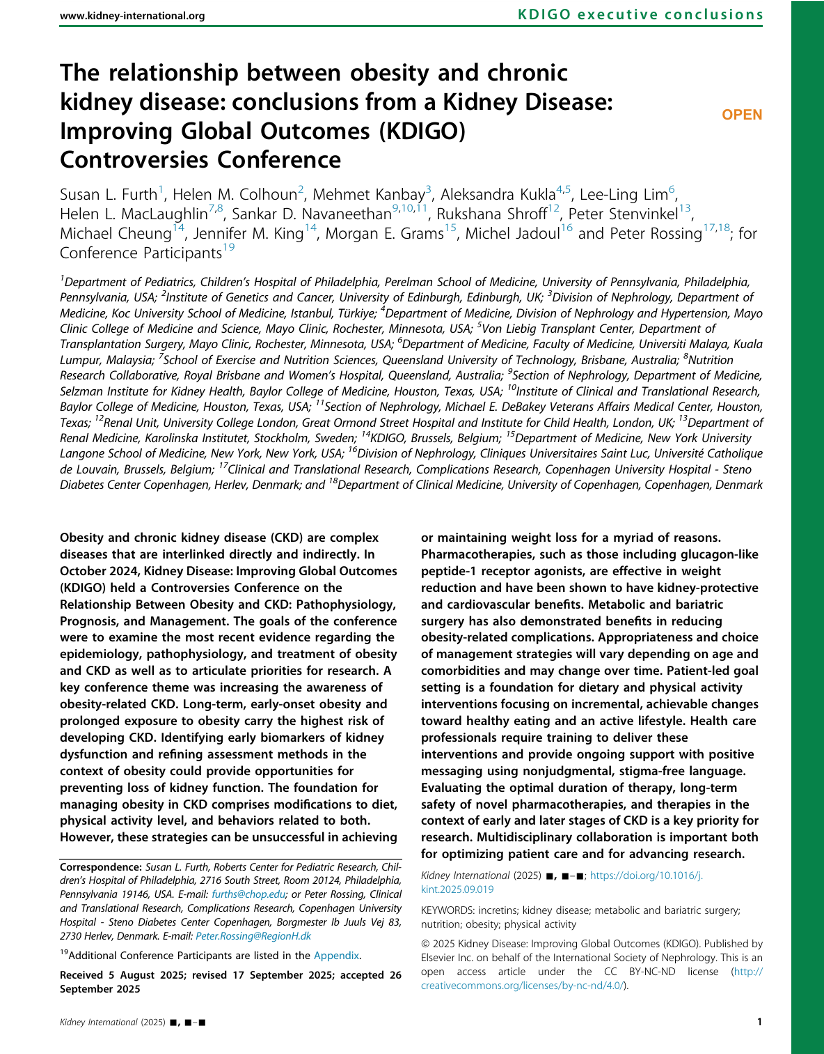
[Brussels, Belgium] — KDIGO is pleased to announce the online publication of the conference report from its Controversies Conference on the Relationship Between Obesity and Chronic Kidney Disease: Pathophysiology, Prognosis, and Management in Kidney International. The conference brought together patients and international experts in nephrology, endocrinology, epidemiology, and nutrition to examine emerging evidence and define research priorities to address the increasing global burden of obesity-related CKD. The conference was co-chaired by Susan Furth, MD (United States), and Peter Rossing, MD (Denmark).
Participants reviewed evidence showing that long-term, early-onset obesity substantially increases the risk of CKD. The mechanisms through which obesity influences kidney function are not clear, although prolonged exposure to obesity is a key determinant of future kidney risk, underscoring the importance of early prevention, identification, and management of obesity-related CKD.
Discussions highlighted the persistent challenges of accurately assessing kidney function in people living with obesity, in part due to the limitations of body mass index and creatinine-based estimates of glomerular filtration rate. Changes in body composition, muscle mass, and weight over time can mask early kidney disease and complicate monitoring, particularly during weight loss interventions.
“Effective obesity treatment has the potential to improve kidney outcomes far beyond weight reduction alone,” said Dr. Rossing. “As with metabolic and bariatric surgery, newer pharmacologic therapies, including GLP-1 receptor agonists, can lead to meaningful weight loss and promising cardiovascular and kidney benefits. At the same time, critical evidence gaps remain around optimal timing and duration of interventions, particularly across CKD stages. Addressing these gaps will be essential to translating innovation into better kidney care.”
“Obesity is not simply a coexisting condition in CKD; it influences kidney function across the life course,” said Dr. Furth. “Because sustained exposure to obesity beginning early in life confers risks for CKD and cardiovascular disease, there is an important need for earlier identification, improved assessment tools, and prevention strategies. Patient participants at the conference emphasized the need for patient-centered, stigma-free care delivered by a multidisciplinary team.”
Please visit the conference webpage to download the report, watch the plenary presentations, and access additional resources. |