×

KDIGO is thrilled to share a new three-part series of the Conversations in Nephrology podcast focusing on APOL1 kidney disease.

Hosted by Kirk Campbell, MD (University of Pennsylvania, United States), the series brings together leading experts and patient perspectives to explore the genetics, burden, and management of APOL1 kidney disease, as well as the importance of early detection. Building on insights from the KDIGO Controversies Conference on APOL1 Kidney Disease and its published Conference Report, each episode offers a concise, evidence-based discussion to help clinicians and researchers stay informed about this rapidly evolving field.

You can listen to the new series on the KDIGO website or on your favorite podcast platform.

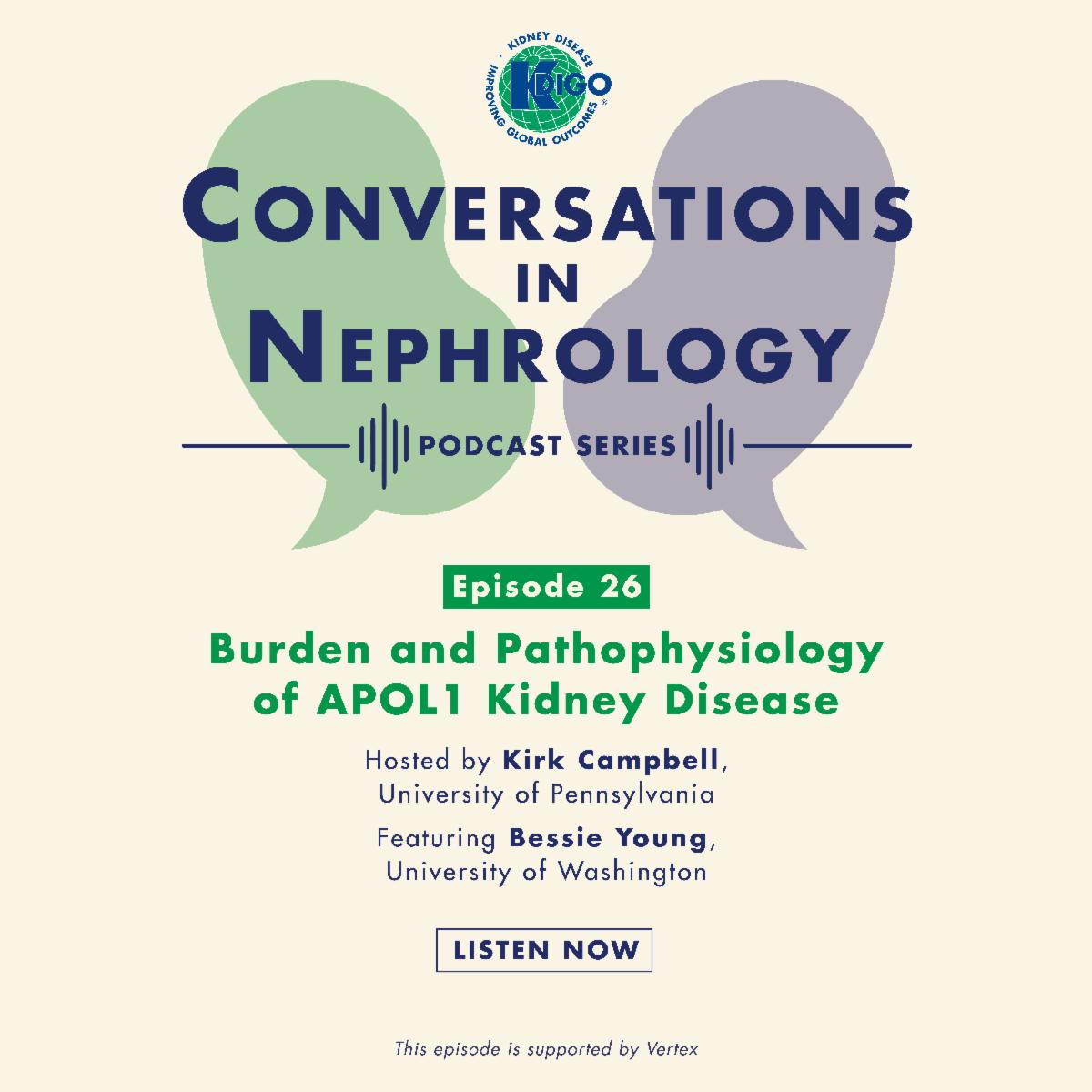
Episode 26: Burden and Pathophysiology of APOL1 Kidney Disease

Dr. Campbell speaks with Bessie Young, MD (University of Washington, United States), about the discovery and impact of APOL1 variants and their link to kidney conditions such as FSGS. The discussion highlights the pathophysiology of APOL1, new research findings, and ongoing therapeutic trials.


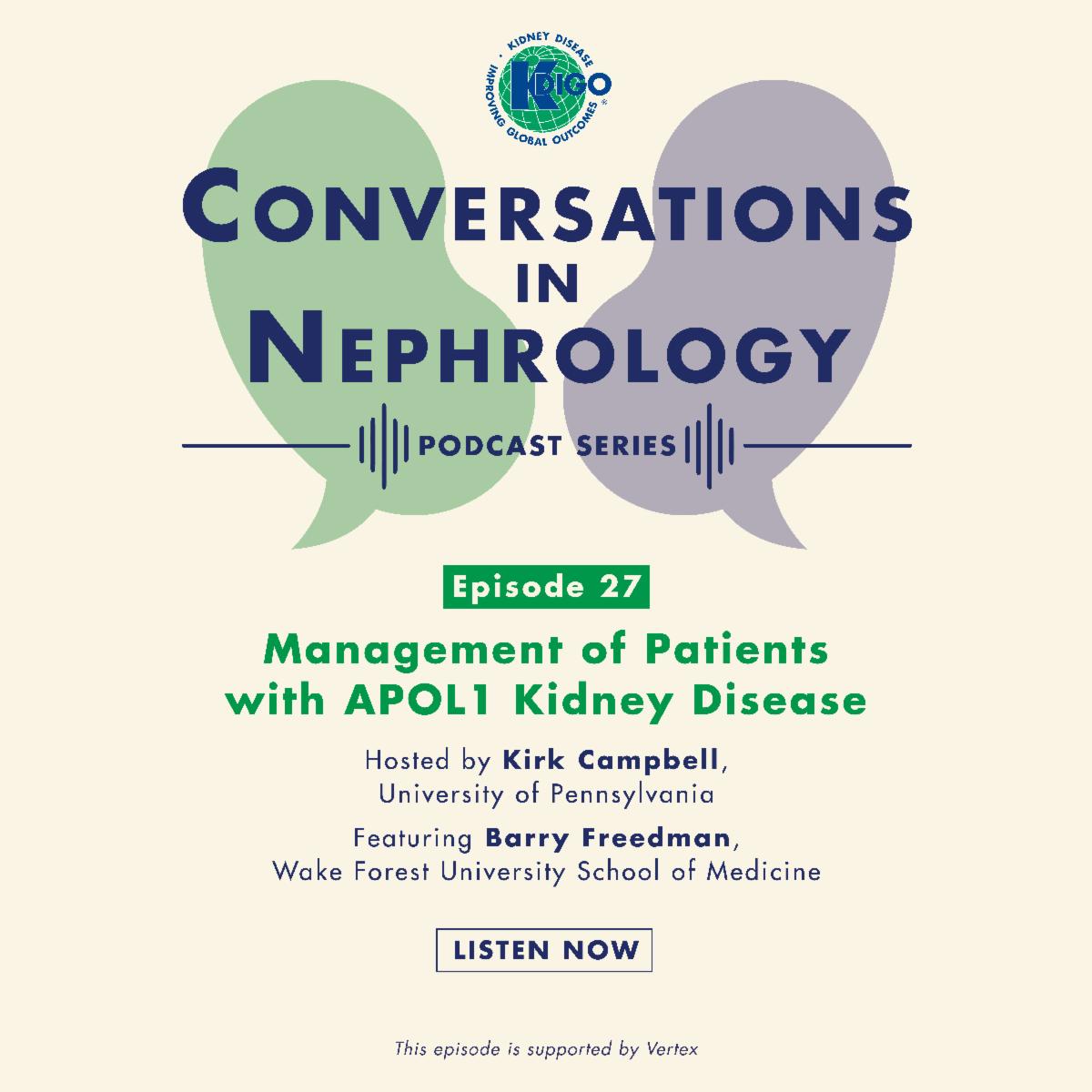
Episode 27: Management of Patients with APOL1 Kidney Disease

In this episode, Barry Freedman, MD (Wake Forest University School of Medicine, United States) joins Dr. Campbell to discuss how clinicians can best evaluate and manage APOL1 kidney disease in practice. The conversation reviews risk factors for progression, the current role of ACE inhibitors and immunosuppressive therapies, and the emergence of new targeted agents designed to address APOL1-mediated injury pathways.


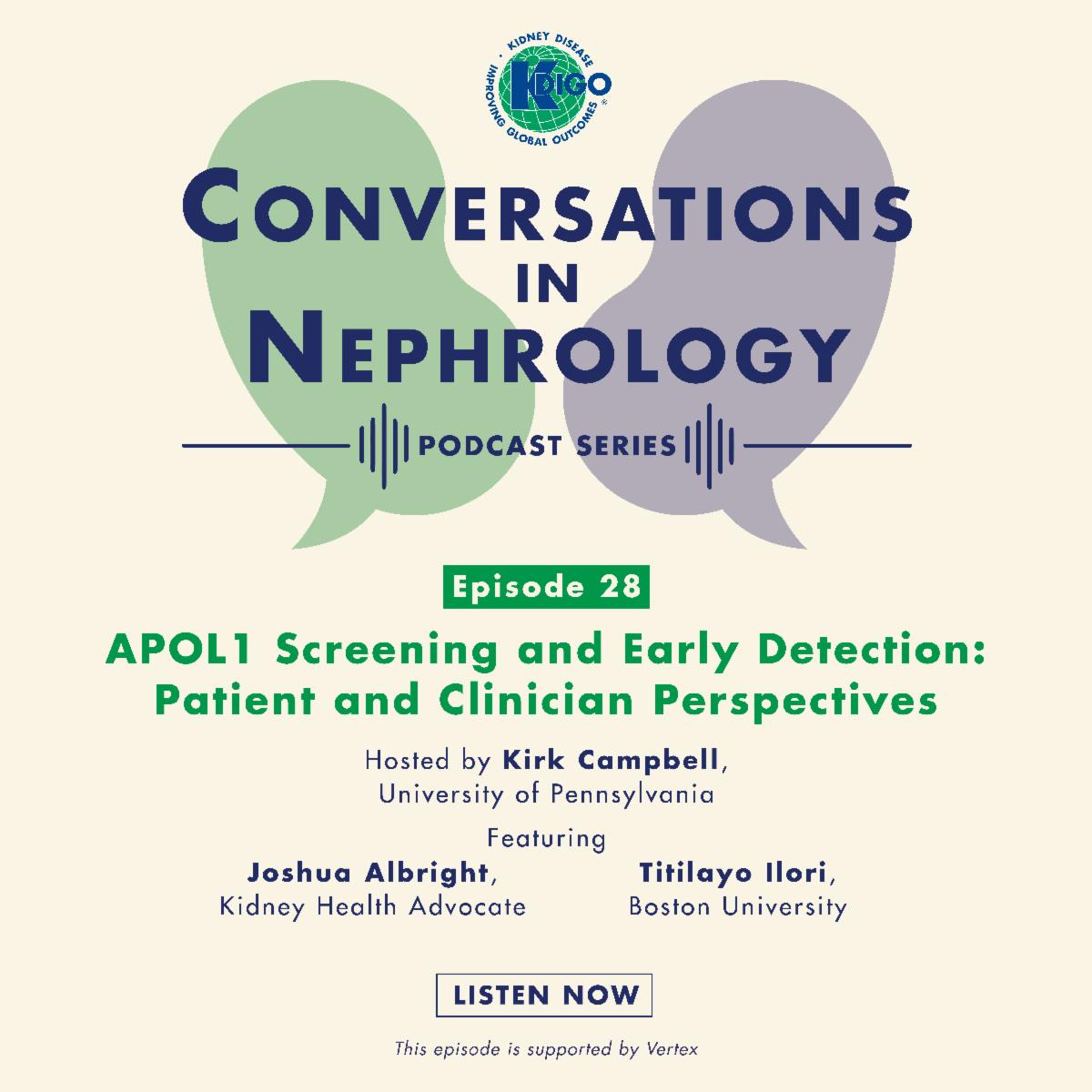
Episode 28: APOL1 Screening and Early Detection – Patient and Clinician Perspectives

In this episode, Dr. Campbell leads a thoughtful discussion with Titilayo Ilori, MD (Boston University, United States), and kidney health advocate Joshua Albright (United States) on how APOL1 screening can change the landscape of kidney care. Dr. Ilori offers a clinician’s view of incorporating genetic testing into practice, while Joshua shares the patient experience of navigating awareness and access. Together, they examine barriers to equitable testing, the importance of education and communication, and how early detection can support precision medicine and better outcomes.


Back to News