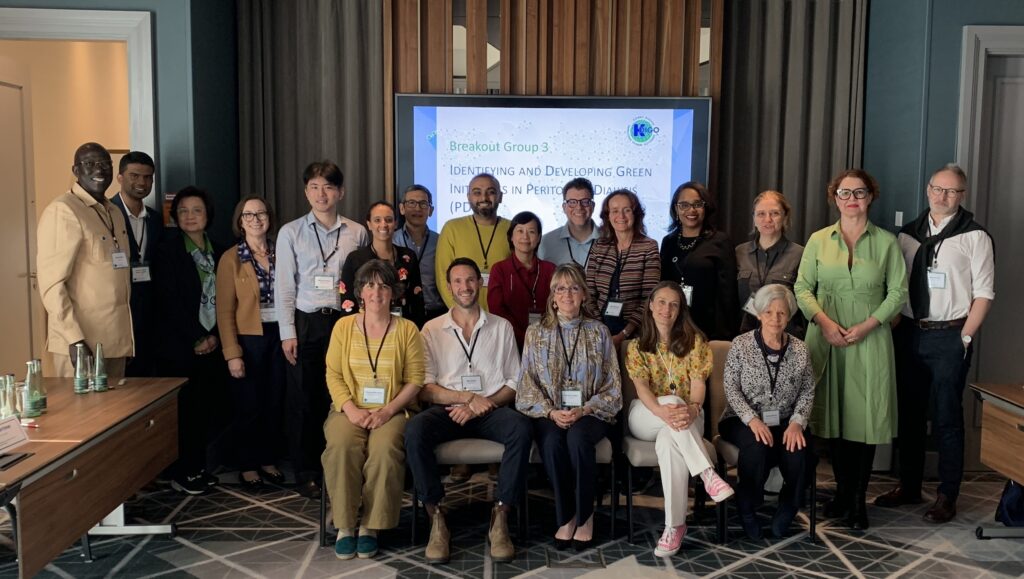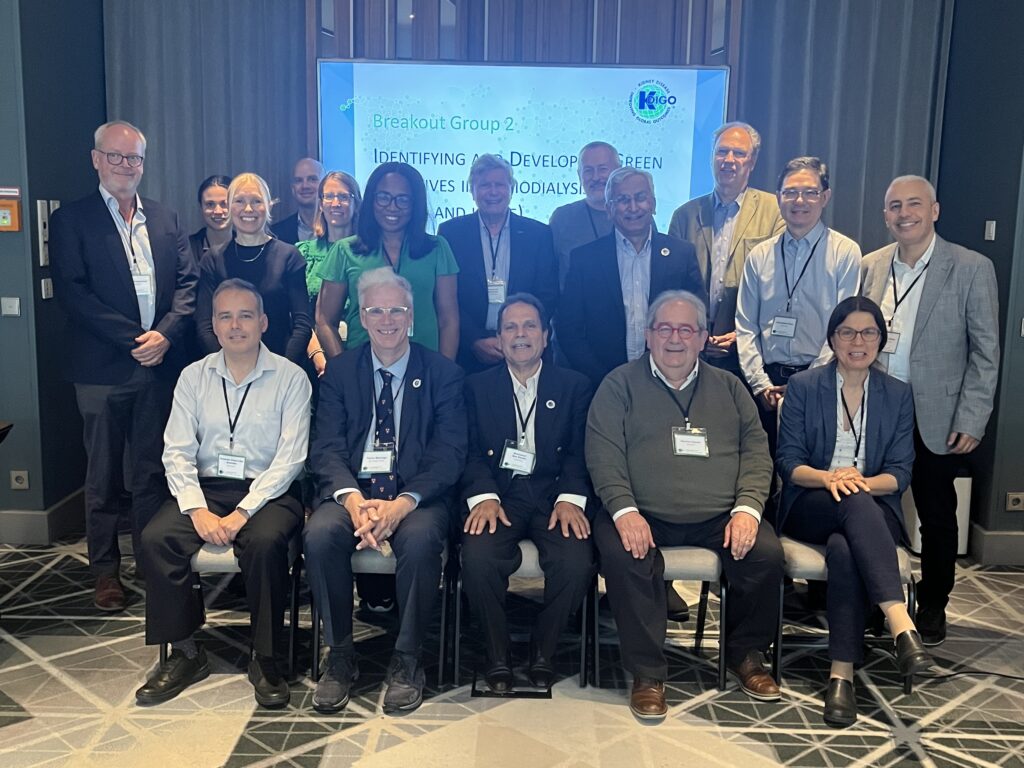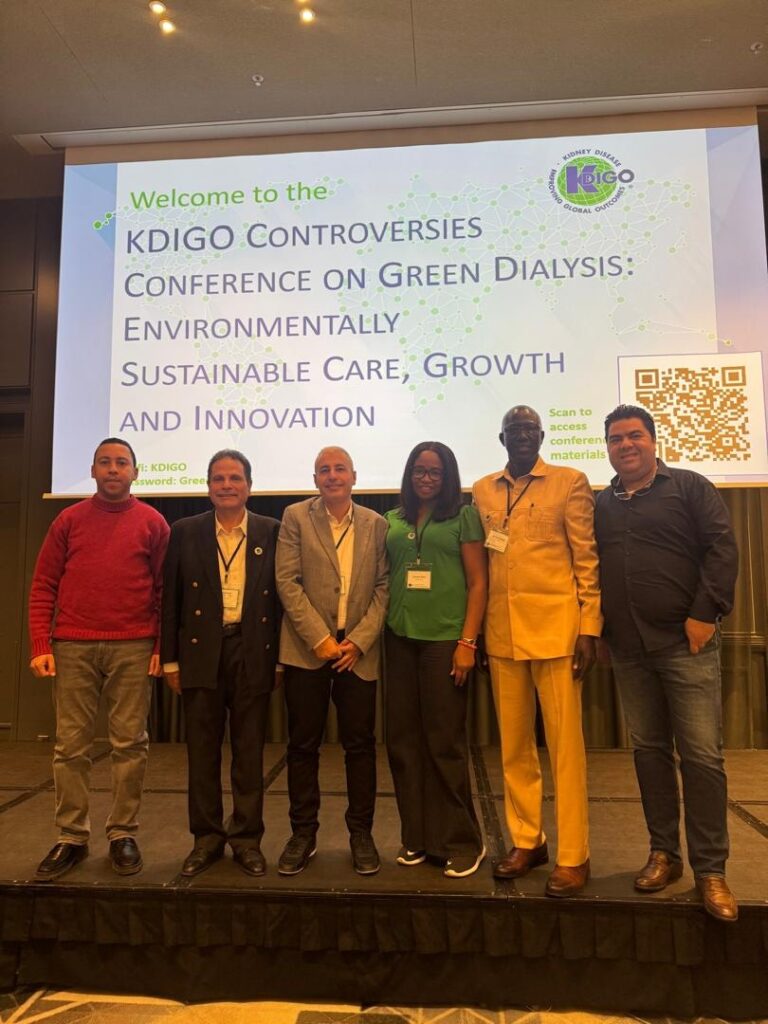

Innovative “green dialysis” initiatives have been implemented successfully in the United Kingdom, European Union, Australia, and elsewhere. The main challenge now lies in achieving rapid and widespread adoption of these practices across diverse regions. Additionally, there is an urgent need for new technologies and models of care. In hemodialysis, key areas for innovation include the development of more efficient water purification systems and energy-saving equipment. For peritoneal dialysis, point-of-care dialysate generation could significantly reduce carbon emissions associated with transport. Across both modalities, the introduction of novel bioplastics or other strategies to reduce harmful disposable materials could greatly mitigate environmental impact.
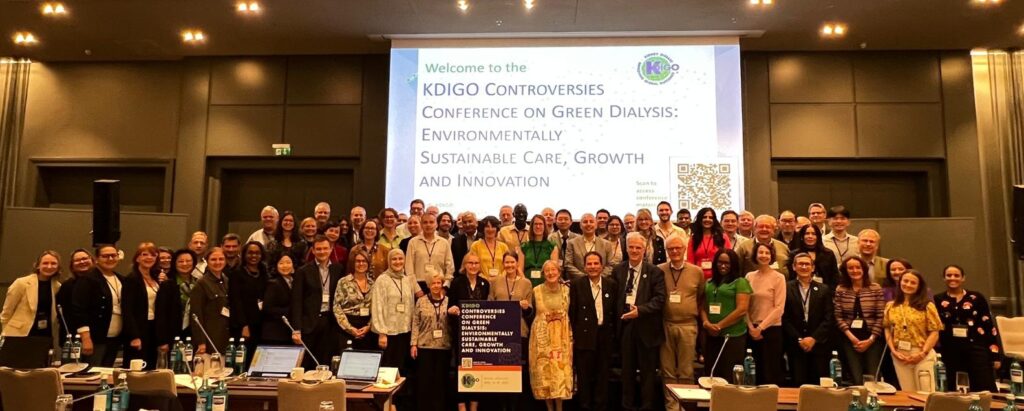
Previously, KDIGO has addressed contemporary dialysis topics such as optimal dialysis prescription, blood pressure and volume management, and approaches for assessing and ameliorating symptom burden. This KDIGO Controversies Conference on Green Dialysis: Environmentally Sustainable Care, Growth, and Innovation intended to be forward-looking, appraising novel promising green dialysis technologies both in the present and beyond. Dr. Katherine Barraclough (Royal Melbourne Hospital, Australia) and Dr. Jennifer Flythe (University of North Carolina, USA) co-chaired this conference.
KDIGO is committed to fully offsetting all CO₂ emissions generated by this conference as part of our responsibility towards climate protection. To achieve this, KDIGO supports PROJECT TOGO in West Africa, an innovative initiative that not only restores natural forests but also promotes sustainable agriculture, builds efficient cooking stoves, ensures access to clean drinking water, fosters women-led cooperatives, and establishes educational programs. PROJECT TOGO empowers communities by sharing knowledge, creating long-term self-reliance, and actively contributing to achieving 12 of the 17 UN Global Goals.
ERA Editorial: Towards Carbon Footprint Measurement of the ERA Congress – This editorial outlines ERA’s first comprehensive effort to measure the carbon footprint of its annual Congress and presents five practical strategies to reduce greenhouse gas emissions while maintaining the scientific value of in-person meetings. https://academic.oup.com/ndt/article/41/2/202/8320540
ISN Green-K Initiative – This initiative advances environmentally sustainable, resilient kidney care worldwide by promoting advocacy, education, and collaborative action to reduce the environmental footprint of kidney care services. https://www.theisn.org/initiatives/green-k-global-environmental-evolution-in-nephrology-and-kidney-care/. If you are interested in learning more about the procurement workstream that is part of the GREEN-K work, please reach out to [email protected]
Kidney Care Sustainability Network – The Kidney Care Sustainability Network brings together kidney professionals to share tools and best practices for delivering environmentally sustainable kidney care. Be part of forum discussions, find/share case studies and publications, drop into monthly network calls. https://networks.sustainablehealthcare.org.uk/kidney-care
KitNewCare – KitNewCare is a pioneering EU co-funded project to make kidney healthcare more environmentally sustainable, with several clinics actively participating. https://kitnewcare.eu
Online short course “Introduction to Sustainable Kidney Care” – Free to access (thanks to KitNewCare), available in English, Polish, Spanish, Italian & Dutch – https://networks.sustainablehealthcare.org.uk/resources/free-access-kitnewcare-sustainable-kidney-care-online-course
Offer of collaboration on integrating sustainability into curricula for kidney care staff – If you are interested in working with KitNewCare and would like to share approaches or get support integrating sustainability practices, please email Frances Mortimer at [email protected]
SusQI Resources – SusQI is a quality improvement framework that supports health systems in integrating environmental sustainability into clinical practice to reduce healthcare’s carbon footprint. https://www.susqi.org
Environmental Impact of Care for Patients with Dialysis-Dependent Kidney Failure Plenary Presentation
Personal & Societal Impact of Non-Eco-Friendly Dialysis Panel Discussion
Moving Toward Sustainable and Greener Dialysis Delivery: Examples from Real World Experience Plenary Presentation
Challenges to Implementing Environmentally Sustainable Dialysis Panel Discussion
Environmental Impact of Care for Patients with Dialysis-Dependent Kidney Failure
Presenter: Frances Mortimer
Personal & Societal Impact of Non-Eco-Friendly Dialysis: From crisis to opportunity!
Presenter: Mohamed Ben Hmida
Personal & Societal Impact of Non-Eco-Friendly Peritoneal Dialysis
Presenter: Junelle Speller
Sustainability program within the Kuratorium for Dialysis and Kidney Transplantation (KfH e.V.)
Presenter: Joachim Beige
PVC Recycling in Peritoneal Dialysis
Presenter: Nathan Berman-Parks
Presenter: Karin Gerritsen
Challenges to implementing environmentally sustainable dialysis in LMICs
Presenter: Abdou Niang
Policy Imperatives to Drive Environmentally Sustainable Dialysis
Presenter: Suzanne Watnick
Re-using Dialyzers & Dialysate
Presenter: Fokko Wieringa